1. Irreversible (Gaspar Noé, 2002)

Is this the most over the top, in your face movie you'll ever see? No. But have I ever seen a more disturbing movie scene than the near 10 minute rape scene in Irreversible? Again, no. Not to mention a death scene involving a fire extinguisher, Dutch angles and a low frequency that causes nausea used throughout the first 30 minutes.
See also: I Stand Alone (Gaspar Noé, 1998), Enter the Void (Gaspar Noé, 2009)
2. Begotten (E. Elias Merhige, 1990)

Begotten remains one of the most important movies I've seen, and not simply for its shock factor. Shot on black & white reversal film and re-photographed, this is one of the most visually intriguing movies my eyes have been subjected to.
Full movie link: Begotten
3. Orozco the Embalmer (Tsurisaki Kiyotaka, 2001)
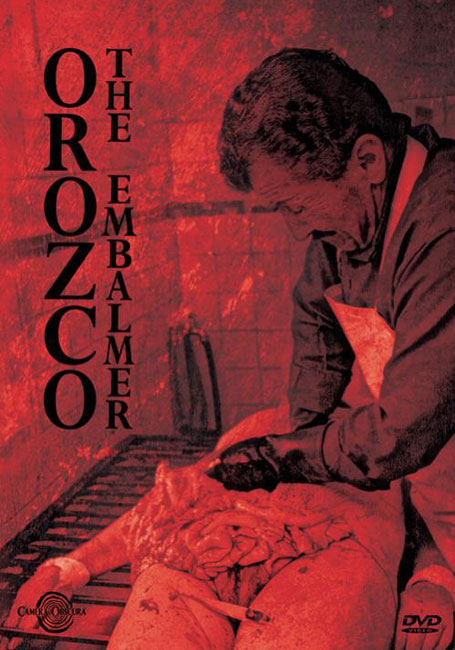
The one and only documentary on the list, Orozco is an extremely vivid look at an embalmer in a small, impoverished town in Columbia. While I generally write off "shockumentaries," this goes far further than simply recording the embalming process. In fact, there are scenes not involving any funeral preparation that can hit home just as hard, if not harder, than the graphic violence.
4. El Topo (Alejando Jodorowsky, 1970)

Anything Jodorowsky touches is gold, and El Topo fits perfectly on this list. No words can describe El Topo, so just watch it. And if you like to do drugs, be sure to do plenty before watching. Perfect for anyone who enjoys surrealism and David Lynch.
See also: The Holy Mountain (Alejando Jodorowsky, 1973)
5. Henry: The Portrait of a Serial Killer (John McNaughton, 1986)
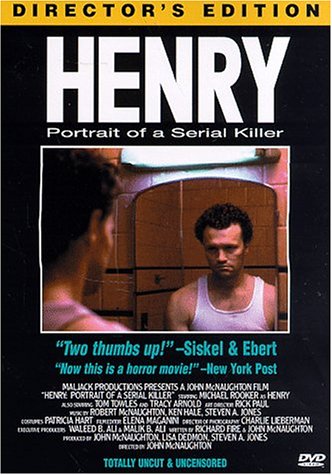
Henry is loosely based on Henry Lee Lucas, aka The Confession Killer, a serial killer whose body count is unknown but spread throughout the 60's until the early-80's. While the level of violence is surprisingly low for the subject, a look into the mind of such a sociopath is a genuine experience in a movie.
6. Salò, or the 120 Days of Sodom (Pier Paolo Pasolini, 1975)

Salò is undoubtedly one of the most infamous movies of all time. 18 teenagers are kidnapped in 1940's Italy, and subjected to brutal levels of mental and physical torture.
7. Men Behind the Sun (Tun Fei Mou, 1988)

Another film based loosely on true events, Men Behind the Sun captures one of history's most horrific events, Japan's Unit 731 camp during World War II. Research done on prisoners of war regarding chemical and biological warfare, 2008's Philosophy of a Knife also follows the same atrocities in great detail.
See also: Philosophy of a Knife (Andrey Iskanov, 2008)
8. Visitor Q (Takashi Miike, 2001)

Takashi Miike is a staple in the horror movie world, and one of the best directors to come out of Japan. Moments involving scenes filmed in a home movie emulated style only add to the bizarre nature of Visitor Q.
9. Cannibal (Marian Dora, 2005)

If you haven't noticed, I'm a fan of movies based on true stories. It only adds to the effect when you've finished watching and are realizing that this actually happened, it's not just some preposterous plot. Armin Meiwes is a German man who sought a lover to "consume." Enough said.
10. Nekromantik (Jörg Buttgereit, 1987)
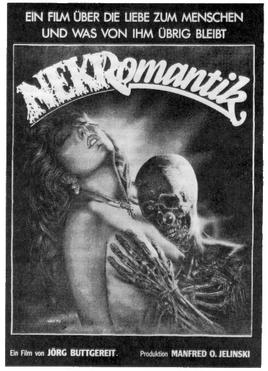
Possibly the most over the top movie ever. The title and poster essentially sum it all up, a corpse is brought home by a man to his wife to spice up their sex life. Germans are really fucking weird people.

No comments:
Post a Comment